
Turn vibe-coded $#!+
into real business software.

Win the half-built app handoff. Map what your client already made onto Fork’s hardened infrastructure, finish the parts that matter, and run every client in their own workspace, without inheriting five fragile stacks.

From handoff to handled

Drop the project in.
Fork takes it from there.

Bring the project exactly as it left Lovable, Bolt, or v0. Fork maps it onto the backend it never had, resolves what was quietly broken, and gives your whole team one place to build, review, and deploy it.

01

Drop it in

No cleanup first. Bring the project exactly as it stands and Fork reads every screen and route, keeps what genuinely works, and inventories what the front end was only pretending to do.

lovable-export.zipgithub.com/client/mvpbolt-checkoutv0-dashboard
02

Map it to Fork’s backend

The agent wires what they built onto Fork’s auth, database, and storage, then resolves the bugs the duct tape was hiding. Demo login becomes real login. Data stranded in the browser gets a schema.

Demo loginFork Auth
Data in localStoragePostgres
Checkout that 500sPayments
Bugs the demo hidresolved
03

Build and ship together

Your team works alongside the agent in one shared workspace. Review every change, keep a way back when one breaks something, and deploy to a live URL your client can open.
KPAL+3live on client.fork.site

Everything the prototype
was missing

The half of the job nobody vibecodes: logins, one client’s data kept away from another’s, permissions, a real database, email that arrives, backups, a way back when a change breaks something. Already running, identical for every client you land, with one agent across it.

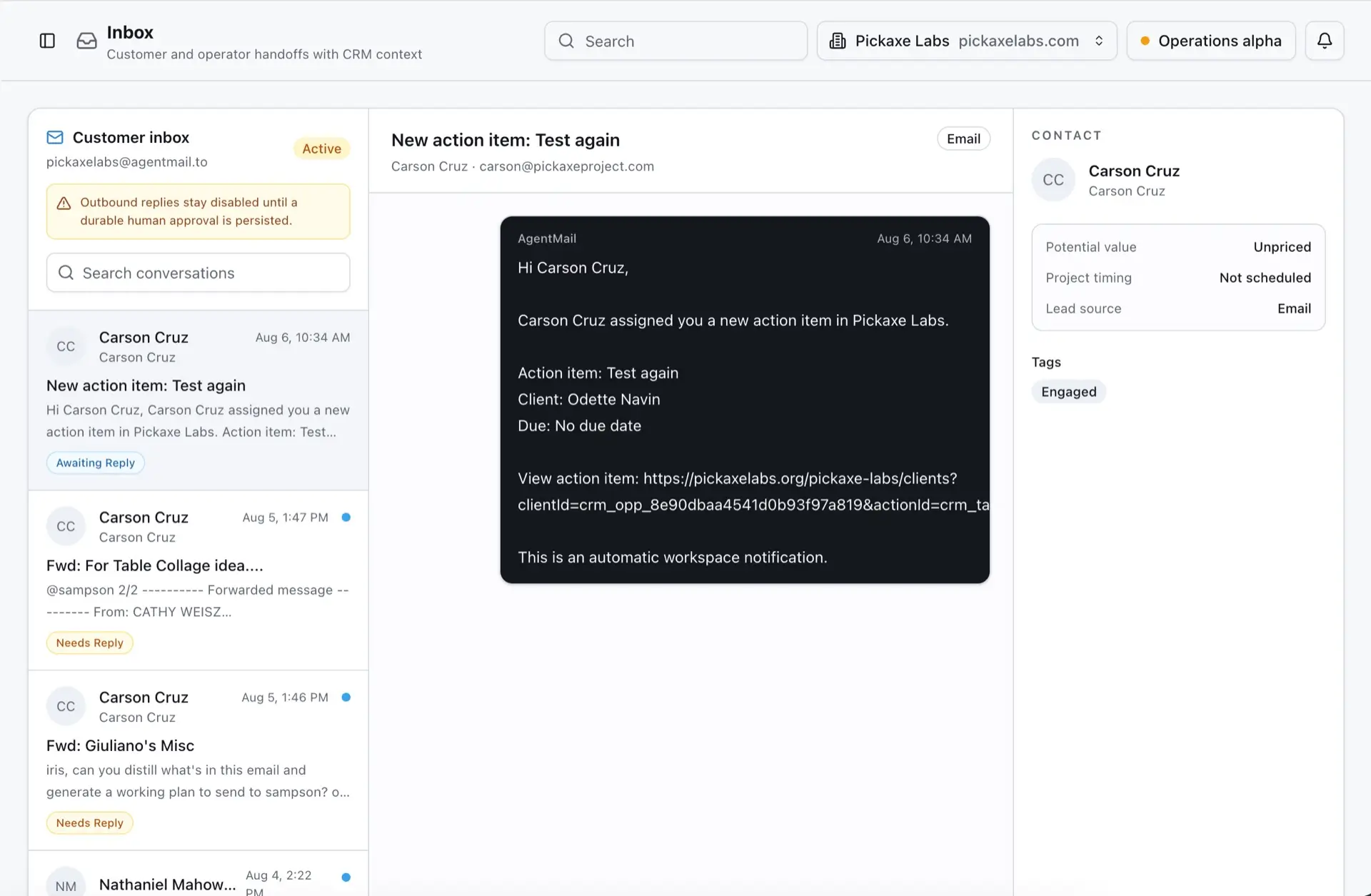
  • Customer email arrives with the CRM record beside it. The agent drafts the reply and holds it; nothing outbound leaves the workspace without your approval.

Plus one unified agent that reads what your client built, keeps the part that is genuinely theirs, and does the rewiring you would otherwise scope at three weeks and quote at six.

Finishing it in place

  • Reading code nobody wrotebefore you can quote it
  • The last 30 per centunscoped by definition
  • Keys sitting in the front endfound on day one
  • One customer's data beside another'sor no separation at all
  • A stack you didn't chooseand now support
  • Running on their personal accountand their personal card
  • Every client's app differentnothing you ever build twice
  • The call at 6pmfor as long as they're a client
A project you can't priceand can't repeat
Land it on Fork insteadearly access · $99/mo

The rescue that never quite ends

Finishing a vibe-coded app where it stands means owning it. Every one is bespoke, so nothing you learn on this client makes the next one faster, and the support call is yours for as long as they stay.

Don’t just finish it,
land it somewhere

A rescue you complete is a project that ends. A rescue you land on a platform you run is a client who stays. Start from modules that already work, tell the agent what this client's version needs, and keep the guardrails on while your team works.

Five clients, five workspaces

The fifth rescue should be easier than the first

Land every one on the same rails and they stop being one-offs. Their app, their brand, their login, their data. All in a workspace you administer, beside four others that behave exactly the same way. What you learn on one is worth something on the next.

  • Their idea kept; the plumbing standardised
  • A workspace per client, none of them touching
  • The retainer starts where the project used to end

Ready to say yes to the next one?