
You already built it.
Now sell it.

You got it working, and it works. Fork takes it from working to finished: the screens you left rough, the empty states, what it says when something breaks, how it holds up on a phone, with an agent that keeps polishing it long after the weekend you built it in.
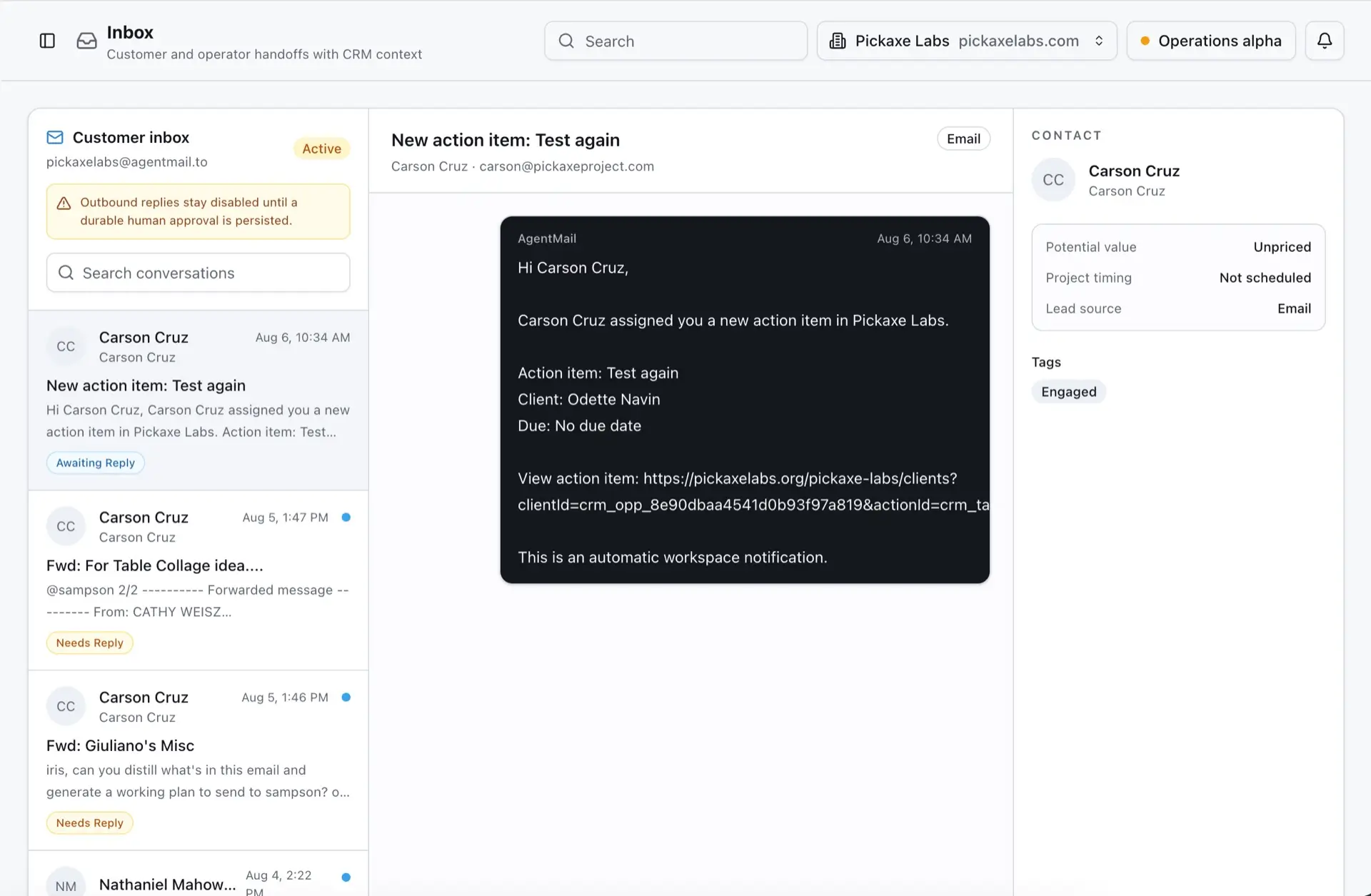
The same standard as these,
still your product

These are production software: a shared inbox, a CRM, bookings, n8n for automations, NocoDB for data, Discourse for community. Yours doesn’t become one of them. It gets held to the same level: polished where people see it, hardened where real use breaks it, and everything that made it yours left alone. Switch any of these on alongside it if you want them.

  • Customer email arrives with the CRM record beside it. The agent drafts the reply and holds it; nothing outbound leaves the workspace without your approval.

Plus one unified agent that already knows what you built and why it works that way, so the next round of polish is a sentence you type rather than an evening you lose.

Between your prototype and a product

  • The screens you left roughempty states, loading, the 404
  • What it says when it breaksan error a customer can act on
  • How it holds up on a phonethe layout you tested once
  • Accounts and loginssessions, resets, invites
  • Keeping customers apartone company can't see another
  • Roles and permissionswho may change what
  • Taking moneyplans, invoices, failed cards
  • Somewhere to runhosting, domains, certificates
  • Email that arrivessending, replies, deliverability
  • Data you can trustbackups, migrations, an audit trail
  • A way backwhen a change breaks it at 6pm
  • A public siteso people can find and buy it
None of it is the ideaall of it is the job
Already built, already yoursearly access · $99/mo

The demo was the easy part everything after it is the work

Getting to working takes a weekend now. Getting to finished is where projects stall, because what sits between the two is a hundred small polishes and none of them is the thing you set out to build.

Don’t just prototype,
ship

A prototype proves the idea; a product survives other people looking at it. Start from modules that are already finished, tell the agent what to smooth out (the copy, the layout, the states you skipped), and let anyone on your team do the same inside guardrails you set.

From one workspace to many

The second customer is the hard one

What you built knows your business. Selling it means someone else’s business lives in it too, without touching yours, and it has to look finished to them on the first screen. That is a workspace each: same software, polished once, their name on the front and their data behind their own login.

  • A login screen with your name on it
  • Every customer in a workspace of their own
  • Change it by asking, not by redeploying

Ready to turn it into something you can sell?