

Ann MacNeill of OakseedAI knows how much a good question can change a conversation. With a background in event marketing and experience building tools for clients, she saw an opportunity to bring that thinking into an agency's website.
We worked with Ann to build RainChain on Fork: a way for visitors to get useful insight and for agencies to understand a prospect before their first call.
The Challenge
A website enquiry often gives an agency a name and an email address. Understanding what that person needs usually comes later.
Ann wanted to bring some of the discovery work into the first interaction. Agencies already have valuable questions, assessment criteria, and recommendations inside their teams. The challenge was turning that expertise into something a visitor could use.
Her idea needed to do three things:
- Ask relevant questions about a prospect's challenges and goals.
- Give something useful back, even if the visitor did not book a meeting.
- Keep the context so the agency could follow up with a clearer understanding of the prospect.
The Solution
RainChain connects the website experience to the work that happens after it. An agency can offer a branded diagnostic, share a personalized assessment, and carry the answers into its prospect workflow.
Working with Ann, we built:
- A website diagnostic shaped around the questions that matter to each agency.
- Personalized reports with scores, recommendations, and next steps that visitors can download.
- A connected CRM that brings prospect answers, reports, and activity together for follow-up.
- Separate client workspaces with branding and authentication, so the experience can be adapted for different agencies.
The goal is a useful exchange from the start: the visitor leaves with insight, and the agency has more context for the next conversation.
Inside RainChain
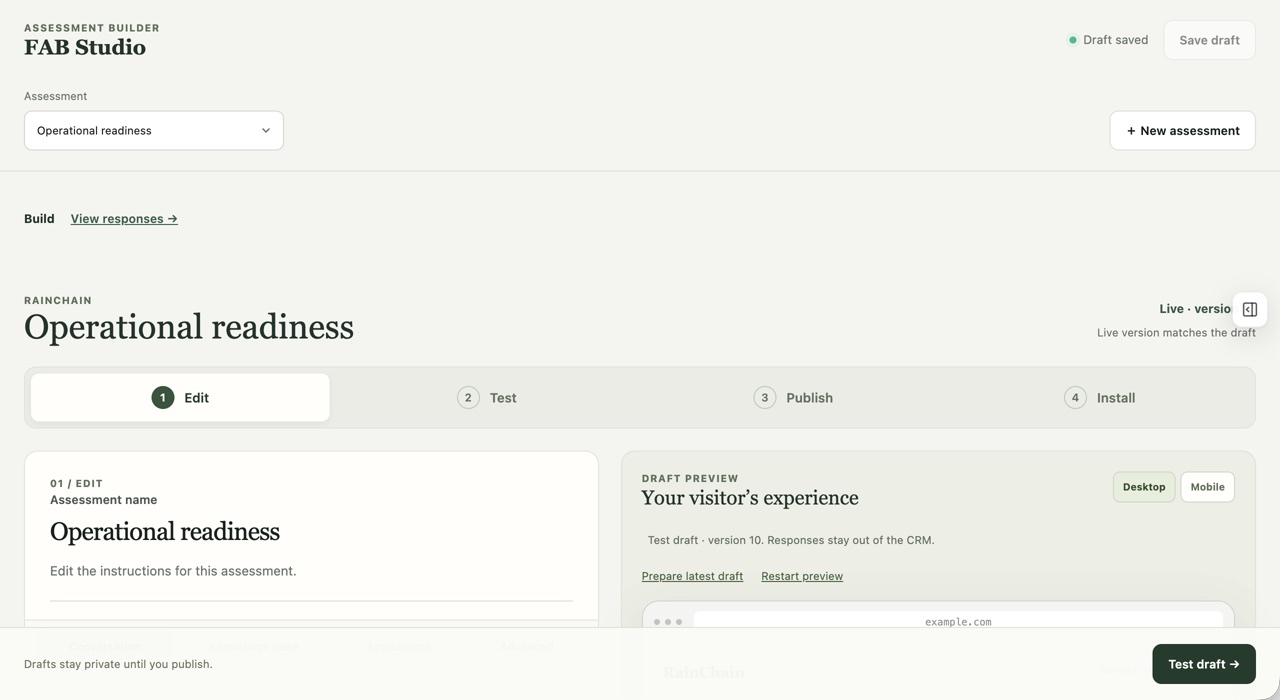
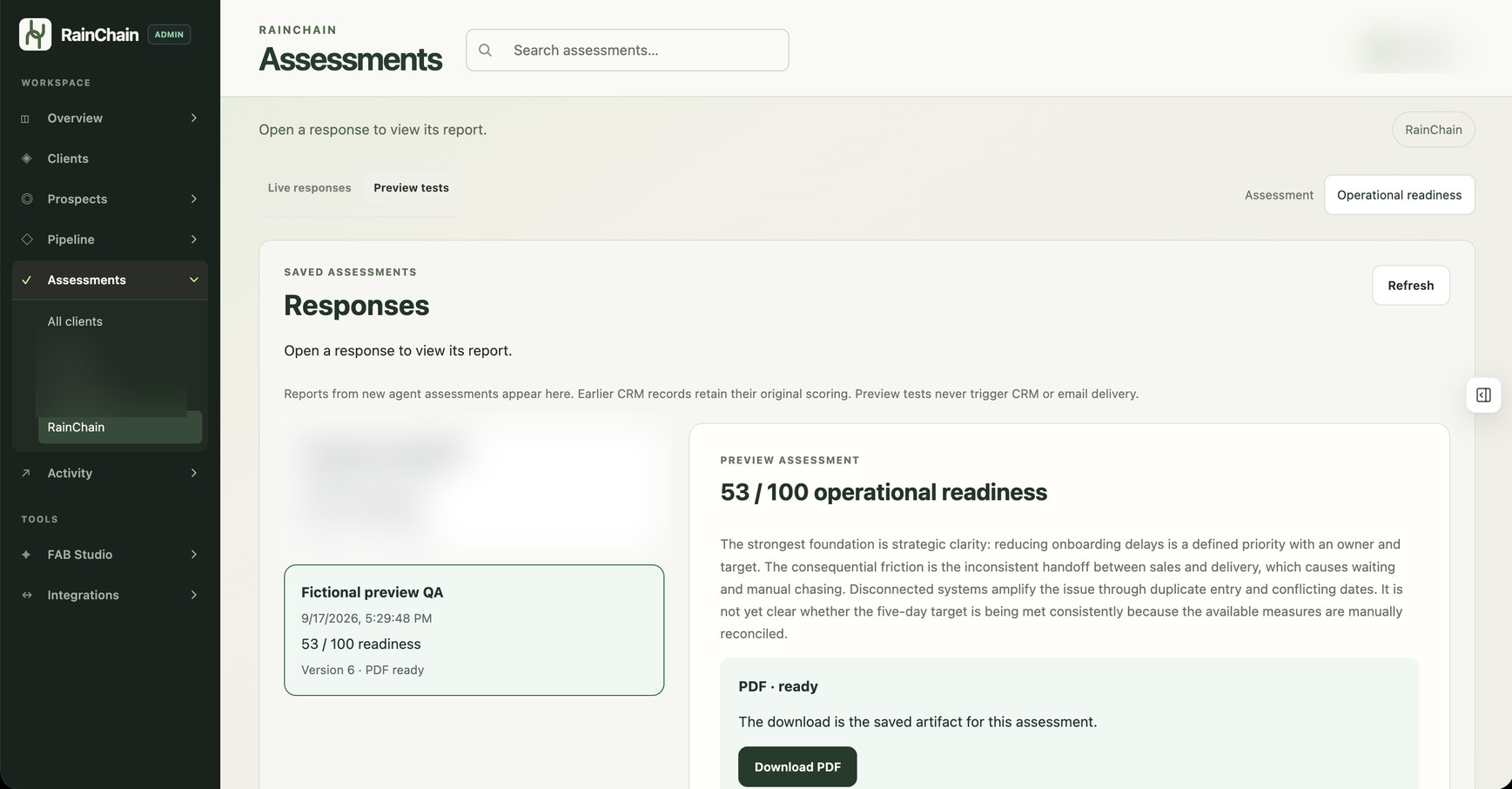
Ann built more than a questionnaire. RainChain gives an agency a place to shape its diagnostic, test the visitor experience, and review what each completed conversation reveals.
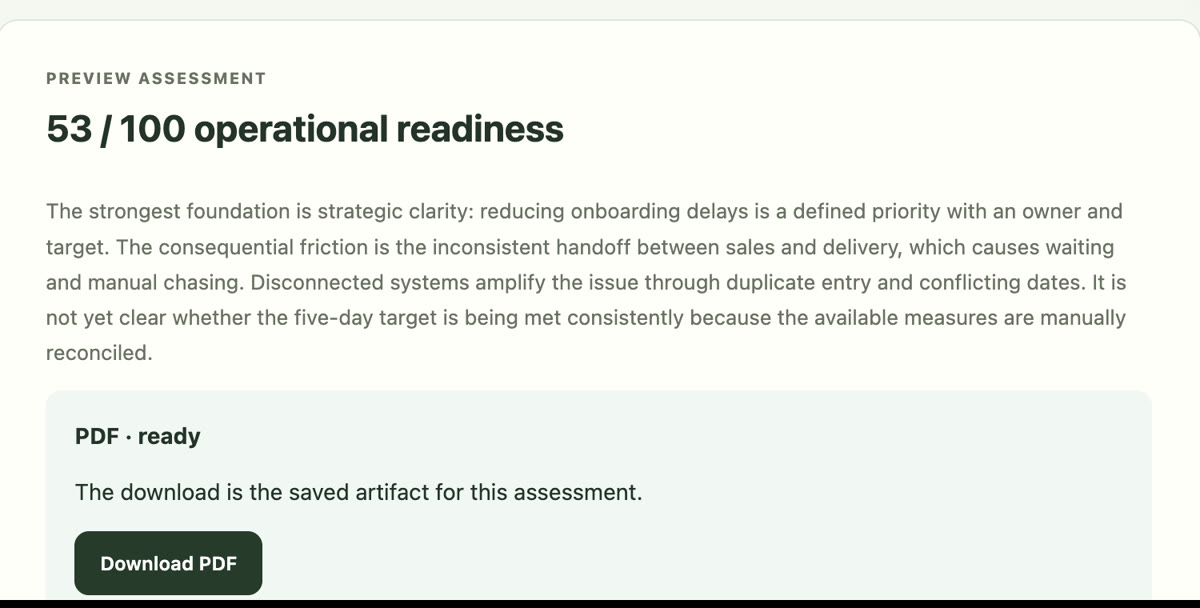
Original RainChain admin screenshots. Client names, account identity, and a real response are blurred in the assessments view. The report shows a fictional preview test. Open an image to see it at full size.
How it works
- 01Put the agency's method into the assessment
The team sets the conversation, its supporting knowledge, and the look of the website experience in FAB Studio. It can test a draft before publishing it.
- 02Invite the visitor into a useful conversation
On the agency's site, the diagnostic asks about the visitor's goals and operational challenges instead of stopping at a contact form.
- 03Return a personal report
RainChain turns the answers into findings and practical next steps. Where the answers support a score, the report shows it; the visitor can download the PDF before sharing contact details.
- 04Carry the context into the first call
The agency can review the saved response, report, and supporting evidence in its workspace, then decide how to follow up.
Building with Fork
Ann came to us with a concrete problem and experience experimenting with AI tools, including Pickaxe. She understood the work her clients needed to do and had a clear sense of what the product should help them accomplish.
We used lessons from building Pickaxe to make early architecture decisions, connect the diagnostic to its supporting workspace, and develop the software around her use case.
Ann's attention to detail shaped the build. We reviewed the flows together, worked through her feedback, and refined how the prospect experience connected to the agency's day-to-day work.
The expertise is Ann's. We are helping her turn it into something people can use.
The Progress
Launch preparation · September 2026By the final review, RainChain had a connected landing page and a working diagnostic and prospect workspace. Ann and our team were testing the experience and reviewing the follow-up flow ahead of its first launch.
The initial audience is PR and communications agencies. The next step is to put the product in front of those teams and use their feedback to guide the next iteration.
The Takeaway
Ann's story starts with a specific moment in her clients' work: a prospect arrives, but the agency knows very little about why.
That focus gave us a clear place to build. With RainChain, she is turning the questions she knows matter into a product that connects discovery, useful advice, and follow-up.
It is the kind of work we want Fork to support: helping people turn their understanding of a business into software shaped around it.